|

Frequently Asked Questions
1- Construction Loans seem to follow stages. What are they?
Though this may
vary from project to project, there is are logical steps at which
construction loans guidelines allow disbursements to be made.
The eight main stages of construction are:
-
Site Excavation,
Grading and Foundation.
-
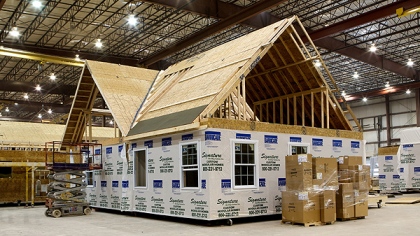
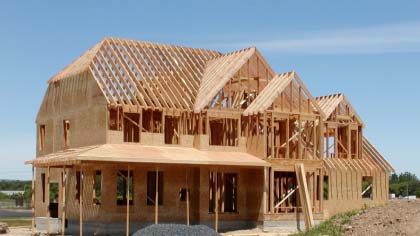
Framing, Walls and Roof
-
Mechanical Systems,.
Plumbing and Wiring
-
Exterior Wall Finishing
-
Drywall Installation
-
Interior Trim, Cabinets
and Fixtures
-
Painting, driveway
Installation and Certificate of Occupancy
2-
What is Loan to Value?
Just like a purchase mortgage loan
Loan, construction loans are made on the bases of Loan To Value,
commonly abbreviated as LTV. This is the number obtained by dividing the
Loan Amount by The Value of the Property.
For example, if you purchase a property for $100,000 by putting
$20,000 down and obtaining a $80,000 loan, then your loan’s LTV is 80%.
In the case of construction loans however, Value refers to the appraised
Future Value of the Property.
3- What Are The Main Components of
the Actual Costs of Contraction?
For the
purposes of construction loans, the Total Cost is defined
as the total of Land Acquisition Cost, (or present value if obtained
more than 12 months ago), and the Total Construction Cost.
The Construction Cost consists of two components, Hard Costs and
Soft Costs.
Soft Costs are the non physical expenses, such
as: Transfer Taxes, Origination Points, Mortgage Insurance (if
applicable), Overhead, Architectural fees, Permits, Title Insurance,
Appraisal Fee, Hazard Insurance, Course of Construction Insurance,
etcetera.
Hard Costs are the physical items, such as: Land Cost/Value,
Site Prep/Grading, Septic tank/Well, Construction Contract, Cost
overruns, etcetera.
Reserves are the amounts calculated mainly for two purposes.
First component of the reserves is normally equivalent to 5% of the hard
costs and it can be used in case of cost over-runs.
The second component of the
reserve in construction loans is
calculated based on a percentage of annual payments deemed enough to
cover the monthly payments of the construction loan.
Construction Loans are calculated based on the above and the
combination of closing costs, pre payments and inspection fees.
4- What if The Project Costs More Than
Estimated?
Cost Overrun
is a legitimate concern, whether caused by unforeseen circumstances or
last minute changes.
When calculating the Total
Cost, most construction loans will need the addition of a 10% of the
contract amount as a contingency reserve. This contingency can be used
in case of cost over runs.
5- What is
Title Insurance?
Simply put, it is the insurance a property owner obtains (required by
lenders) at the time of purchase, to ensure the proper transfer of Clean
Title.
In the case of Construction Loans, this works slightly different
in that the title search is updated during the course of the
construction.
6- What is Course of Construction
Insurance?
Homeowners normally obtain Hazard Insurance (Required by lenders). In
the case of construction loans an additional insurance policy is
required.
This policy, known as Course of Construction Insurance, covers the
owner against any claims that may arise out of the construction process,
such as personal injury or damage to other property.
Course of
Construction Insurance, is sometimes paid by the General Contractor,
depending on the terms of the contract negotiated.
7- How Do The Loan Payments Work?
Normally it
is assumed that the construction period will be 12 months. However
this may be extended to 18 months.
Normally the
one time close construction loan is originally written for a 31 year
term – 1year construction period and a 30 year Permanent Loan.
In
construction loans, Interest is paid only on the amount Drawn at
any one time, calculated as simple interest. No principal payments are
calculated.
8- Why Does The Contractor Have To Be
Approved?
Construction loans will typically include contractor approval. This
protects the interests of both the Borrower and the Lender.
The process takes 3-5 days, and consists of credit and credentials
check. This should not be interpreted as a guarantee or a warrantee of
the contractor’s quality of work or performance.
9- What Does An
Appraiser Appraise?
At the inception of construction loans, there obviously is no
building to go by. However there is a plot of land and a set of
drawings.
There are
also recent sales of similar properties in the area, that the
appraiser uses to deduce a value for the completed project.
10- What If The Appraised Value Is Lower
Than Expected?
Construction loans, just like their counter part for buying
homes. are dependent on an appraisal report.
Most Appraisers do a very
good job of coming up with a fair value.
However the borrower must appreciate the fact that the appraiser is
there to protect everyone’s interest.
If the
property won’t appraise then it is probably the wrong property for the
area.
11- Does The
Appraiser Guarantee The Value of The Completed Project?
Absolutely not!
An Appraiser prepares a report on the comparable value of the property
based on the market conditions at the time of the report. Construction
Loans are made on the basis of that report.
Market conditions may very well change, and result in a higher or a
lower value, by the time the project is completed.
12. Removed!
13.
Click Here for More Construction Loans FAQ's
Also see:
How is a construction Loan Calculated?
Questions?
Call us Toll Free
or Send an Email,
with any questions or concerns that you may have. Visit Our
State Specific Contact Page,
where you can find our phone numbers to call us, contact us by email
or complete our short, secure application form.
|