
New Home Construction
Construction and take out financing of ground up residential, owner occupied properties, up to four units.
Read more
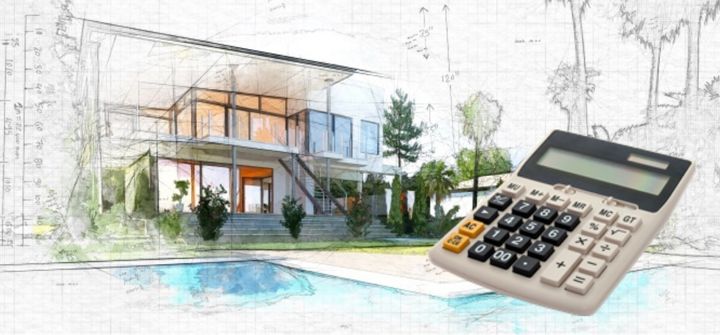
Home Construction Loan Amount is calculated by including acquisition cost, hard and soft costs of construction, and prepayments using this calculator.
A simple interest calculator is used to calculate Construction Loan Payments, but the method depends on the the type of the loan.
Qualifying for a specific loan amount depends on the LTV and LTC of the specific program, borrower’s credit profile and income as well as documentation level.
Qualifying Requirements for Construction LoansIt can be challenging to make payments on both the current and future homes. Including an interest reserve account in a construction to permanent loan will help since during construction only current housing expenses are paid.
The biggest impact of an interest reserve account is in qualifying for the loan since only the future payment is used in qualifying ratios.
Typically, Fix to Flip and Hard Money loans do not offer interest reserve accounts.
Click here for more informatiom on qualifying for a construction loan
The calculation will be different depending on whether a New Home Construction Loan, a Fix and Flip loan or a Hard Money Construction Loan, See detailed explanations and calculator here.
Almost every lender will use a slightly different version of this calculator to determine the loan amount for a construction loan.
It is almost impossible to arrive at the loan amount, and cash requirement with a single calculation as the variables are numerous. There is always a need to review the numbers and readjust them to calculate the final loan amount.
Remember that LTV (Loan to Value Ratio) is based on the future value, and that value will depend on the construction loan program, which will also be governed by the LTC (Loan to Cost Ratio).
Click on the question mark icons for an explanation of the field's requirements.
How to Calculate Interest Only Payments of a Home Construction Loan During Construction
Aconstruction loan's payments are based on the loan amount drawn during construction. If Hard Money or Fix and Flip loan, interest is charged on the entire loan amount.
It is, therefore, difficult, if not impossible, to accurately estimate the payments as the loan amount is subject to change at any time.
Furthermore, no payments are usually made during construction but applied to the payment reserve account set up and included in the loan amount. A good approximation will be to:
A basic and straightforward to use Construction Loan Amount Calculator is available here.
Construction loans that include an interest reserve account:
Construction loans have much more detailed calculations than a simple purchase or refinance mortgage loan amount.
Construction lenders calculate the actual construction loan amount after you answer some simple questions.
The interest-only calculator on this page uses JavaScript. If you have set your browser not to allow JavaScript, you will get a warning asking if you would like to enable the script to run. All you do is let the script run temporarily, and the calculator will work.
Qualifying for a mortgage loan involves debt ratio calculations that vary slightly from one financial institution to the next. In most cases, the borrower's debt ratio is analyzed using the fully amortized payment.
Construction and take out financing of ground up residential, owner occupied properties, up to four units.
Read more
Major remodeling loans for currently owned or purchase and rehabilitation of residential properties, up to four units.
Read more
FHA's rehabilitation loan program for currently owned homes and purchase transactions of up to four units.
Read more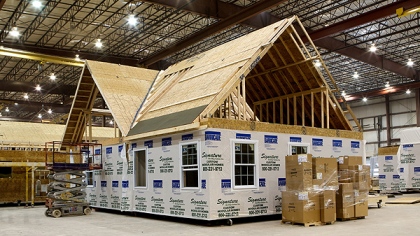
Modular, manufactured & fifth wheel homes. What are the differences? Is financing be available for them?
Read more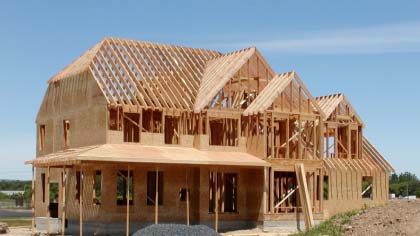
Construction loans are available for damaged credit, but things can work very differently in this case.
Read more
Also known as spec loans these are for speculators who plan on building several homes or a condo project.
Read more
Lot Loans for when you are not ready to build, but the opportunity presents itself. For up to Four Units.
Read more
For hard to document income or very complex combination of corporate and/or trust and personal returns.
Read more
Typical closing costs for a construction loan are a little different from conventional mortgages.
Read more