Construction Loan Center
Tips for Buying Properties in Foreclosure

With the collapse of the sub-prime market has come to the tremendous opportunity to find cost-saving deals. When a lender forecloses on a property, their first priority is to get it off the books as quickly as possible. In all reality, a foreclosed property costs the bank more than one in good standing. This underlying motivation allows first-time homeowners and speculators the opportunity to maximize their money – but pitfalls do exist.
Since lender guidelines, including those for new home construction loans, have changed and become more stringent, qualifying for a loan is now harder to do. The minimum credit score needed to secure a loan has risen, as well as the type of programs offered. Most lenders now require full documentation loans as well as salary verification. In years past, a vast majority of programs allowed stated income. Stated programs are becoming virtually non-existent in the current lending market. Homeowners and speculators should be prepared for more paperwork, verification and approval procedures than in years past.
Another consequence of the housing slump is decreased home values. Not all markets have experienced rapidly declining values, but a majority of previously “hot” markets have slowed down. This means that lenders scrutinize appraisals more than in the past. The last thing the lender wants to do is invest in a home that will be worthless 6 to 12 months in the future. Consumers should be prepared for appraisals on proposed projects to either be cut or go through extensive reviews.
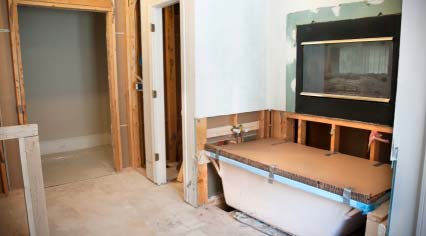
If a homeowner or speculator can get past these two issues, they must then turn to the actual construction project itself. Homes in foreclosure can commonly be in need of extensive work to retain or increase value. Renovations can often include new landscaping, interior and exterior painting, window and door replacement, new flooring, upgraded appliances and cabinets, and new fixtures. If an individual is buying a foreclosed property for the first time, it is important to fully outline the scope of the work needed to finish the home. Hiring an experienced contractor familiar with local codes can be a homeowner’s best asset. Their experience will highlight potential issues and equity-robbing fixes that may be needed on the project.
With the right combination of a construction loan and experienced contractor, renovating an existing property can be extremely beneficial. For those looking to occupy the home, they can save money on the initial purchase price and then customize the home to their specifications. This is a much cheaper alternative to building a custom home or buying a new one. For this building to sell, the lower initial cost of a foreclosure can quickly turn into valuable profits when the home is completed.